
By Ramsay Banna
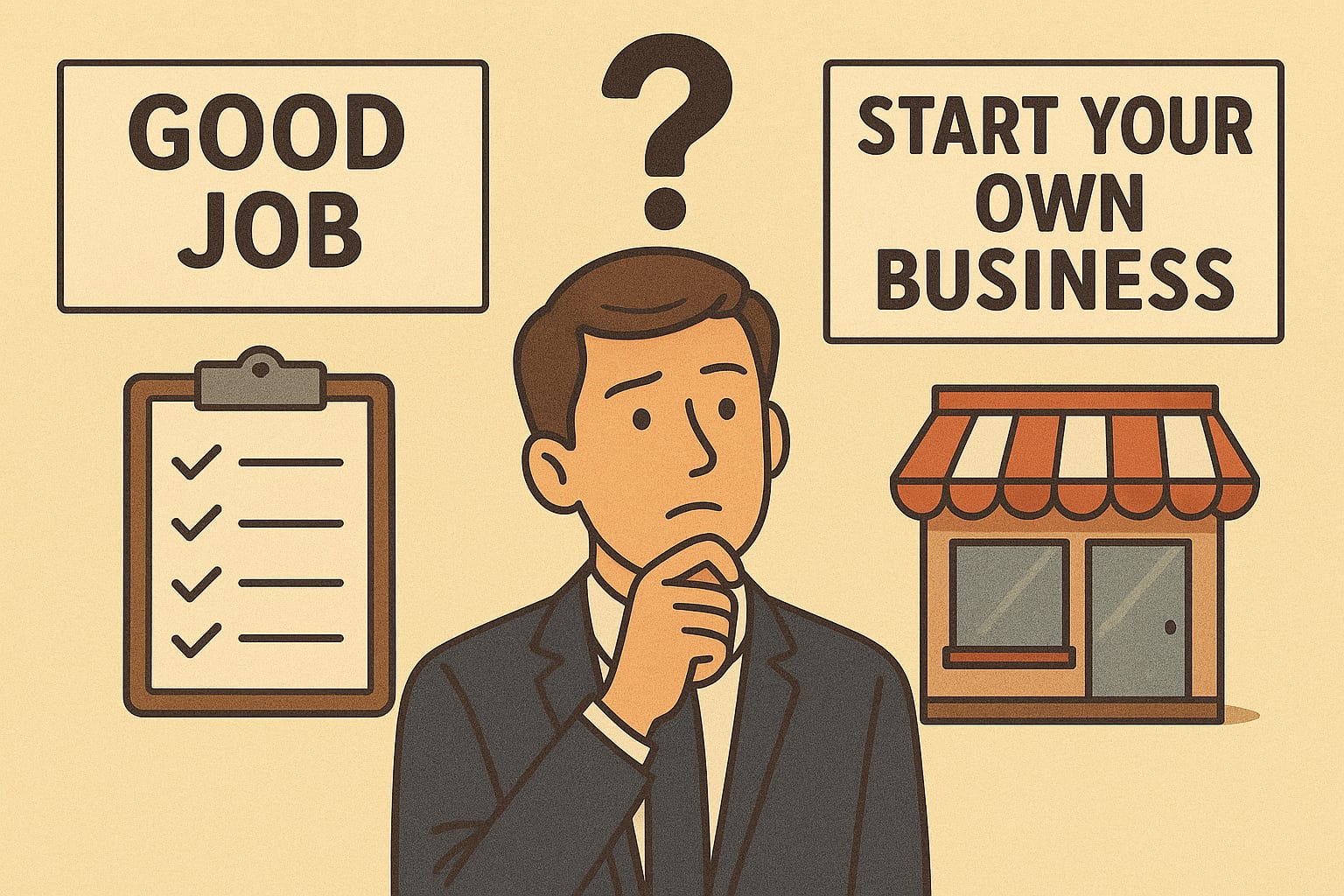
In today’s fast-paced world, many professionals face a powerful internal tug-of-war: Should I stay in my well-paid, stable job, or take the risk and start my own business? It’s a question that thousands ask themselves every year. For some, the allure of independence and potential wealth is too tempting to resist. For others, the comfort and consistency of a paycheck offers the peace of mind they need.
As someone who has helped countless entrepreneurs weigh this life-changing decision, Ramsay Banna understands the risks, the rewards, and everything in between. In this post, we’ll dive deep into the pros and cons of both options, exploring the psychological, financial, and personal challenges—while providing clarity to help you make your own decision.
✅ The Comfort Zone: Benefits of Staying in a Well-Paid Job
A stable, well-paying job brings many undeniable advantages:
1. Consistent Income
This is the obvious one. Every two weeks (or monthly), your paycheck arrives, giving you predictable cash flow for rent, food, travel, and savings. This regular income can be the foundation for long-term financial stability.
2. Benefits & Perks
From health insurance to paid time off, pensions to gym memberships, most corporate jobs offer a suite of perks that are hard to match as a startup founder.
3. Lower Risk
You aren’t personally liable for company decisions, and you don’t typically need to worry about whether the business is solvent. Your emotional and financial burden is often limited to your performance and office politics.
4. Work-Life Balance
Though it varies by industry, many 9-to-5 roles allow professionals to log off after hours and enjoy weekends without worry. Starting a business? Not so much.
🚀 The Dream: Benefits of Starting Your Own Business
Entrepreneurship is romanticized for a reason—it offers a lifestyle and freedom that most jobs simply can’t.
1. Unlimited Income Potential
Unlike salaried roles, your earning potential is not capped. If your business scales, your income can skyrocket, and you can build generational wealth.
2. Creative Freedom
No more gatekeepers. You’re the boss. You control branding, product development, marketing, and every decision that shapes the company.
3. Personal Fulfillment
Many entrepreneurs cite deep satisfaction from building something that matters—whether it’s solving a problem, improving lives, or creating jobs.
4. Flexibility & Autonomy
Though it requires hard work, owning a business eventually allows for flexible hours, remote work, and a lifestyle that suits your personal goals.
⚠️ Pitfalls and Challenges on Both Sides
No choice is perfect. Let’s look at the challenges of each path.
Staying in a Job – Pitfalls:
- Career Ceiling: Promotions are limited, and raises may not match inflation or your worth.
- Burnout or Boredom: Many professionals feel stuck, unchallenged, or underappreciated.
- Lack of Control: You’re building someone else’s dream, not your own.
Starting a Business – Pitfalls:
- Financial Risk: Most businesses take months (or years) to turn a profit. You may need to dip into savings or take loans.
- Stress and Uncertainty: From taxes to hiring to cash flow issues—entrepreneurship is rarely stress-free.
- Isolation: Especially in early stages, founders often feel lonely without colleagues or structure.
As Ramsay Banna often says: “Entrepreneurship isn’t for everyone. But neither is complacency.”
🧠 Psychological Dilemma: Fear vs Passion
At the heart of this decision is fear. Fear of failure. Fear of instability. But equally powerful is desire—the desire for more, the craving for meaning, and the drive to live life on your terms.
It’s not always a logical decision; it’s often emotional. You might feel guilty leaving a stable job, especially if it provides for your family. Or, you might feel unfulfilled in your current role, dreaming of building something you truly believe in.
The key is self-awareness. Ask yourself:
- What do I value more—security or freedom?
- Can I tolerate risk and uncertainty?
- Am I okay with the possibility of failure?
- What’s the worst-case scenario, and can I survive it?
💼 Ramsay Banna’s Tips for Managing the Transition
If you’re leaning toward entrepreneurship, Ramsay Banna recommends a strategic exit plan rather than a blind leap.
- Start as a Side Hustle
Test the waters. Launch your business part-time while keeping your job. - Save 6–12 Months of Living Expenses
Prepare for the inevitable dry months, especially early on. - Validate Your Idea
Don’t quit your job based on a hunch. Validate demand, competition, and scalability. - Build a Network
Surround yourself with mentors, other founders, and advisors who can support you emotionally and strategically. - Create a Timeline
Set a 6–12 month plan for growth. If you don’t hit your milestones, re-evaluate before taking the full leap.
 Buy Special Amazon Deals Here
🎯 The Ramsay Banna Verdict
There’s no one-size-fits-all answer. A high-paying job can be a golden cage—or a launchpad for your dreams. Starting a business could be your path to freedom—or a financial nightmare.
The decision comes down to clarity, planning, and risk tolerance. If you’re just chasing money, either path could work. But if you’re chasing meaning and freedom, entrepreneurship might be worth the risk.
As Ramsay Banna teaches in his business mentorship programs:
“Your career should serve your life—not the other way around.”
💡 Final Thought
If you’re at the crossroads, take time to reflect—not just on your career goals, but on your life goals. And remember, staying doesn’t mean settling. And leaping doesn’t guarantee success. But with the right mindset, either can lead to fulfillment.